New Construction
EarthCraft Certification for Multifamily Construction
TuckerCraft is a certified EarthCraft builder, and multifamily construction is all we do. If you are developing apartments in Georgia or the wider Southeast, that certification means the buildings we deliver are verified by an independent third party against a standard written for this region's heat, humidity and storm conditions, rather than a national checklist applied everywhere.
This page covers what EarthCraft certification requires, what it changes for your project, how it affects affordable housing funding in Georgia, and how it compares to LEED.

What is EarthCraft certification?
EarthCraft is a green building certification program for the Southeast, developed by Southface and the Greater Atlanta Home Builders Association in 1999 and verified by independent third-party inspection.
The regional focus is the whole point. A building in Georgia contends with sustained heat, high humidity and heavy seasonal rainfall. Standards written for a national average do not address those conditions with the same precision. EarthCraft was designed around them.
The program covers single-family homes, multifamily buildings, renovations, historic preservation, light commercial and whole communities. More than 66,000 units have been certified since it began.

What does EarthCraft Multifamily certification require?
Certification is points-based across three levels, Certified, Gold and Platinum, and it covers far more than energy performance.
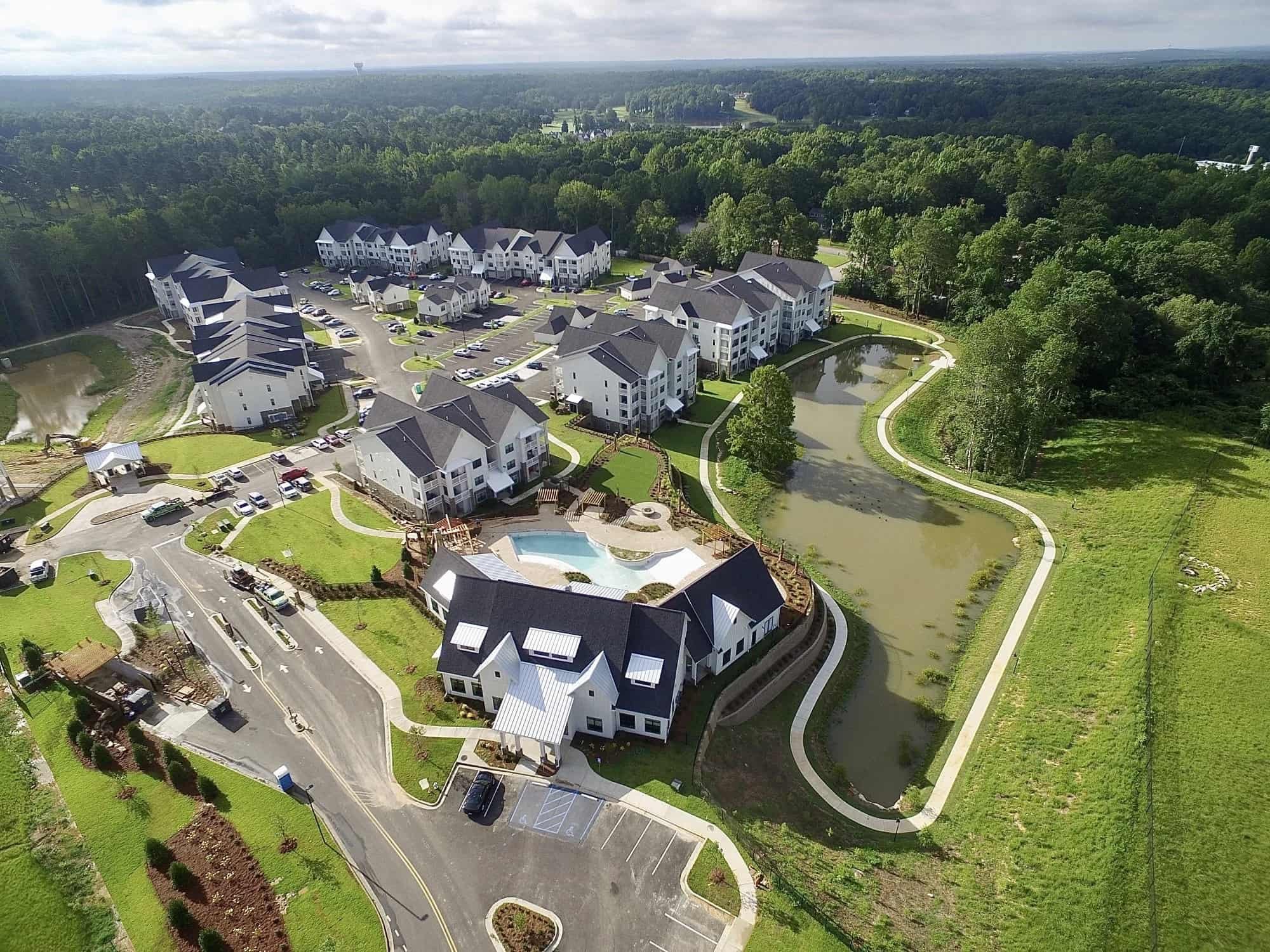
EarthCraft Multifamily launched in 2003 as the first multifamily-specific green building program in the country. It certifies low-rise and mid-rise projects, both new construction and renovation, and both affordable and market-rate developments.
ENERGY STAR certification is required at the Gold and Platinum levels depending on building type, and ventilation requirements follow ASHRAE guidelines. Beyond those, the program is flexible: project teams select the measures that fit the building and the budget.
The standards address indoor air quality, building durability, resident comfort and affordability alongside energy. In practice, certified multifamily buildings are more energy efficient and cheaper to operate, transfer less air between units so odors and sound stay contained, and are built to last longer.
For owners, the benefits Southface associates with certification include lower utility costs, reduced risk and warranty expense, higher long-term appraisal value, and eligibility for federal, state and local tax incentives.
How does a project get EarthCraft certified?
A project moves through four stages, with independent review at two points before the building is finished.
Registration. The project enrolls and the target certification level is set.
Design review. An EarthCraft Technical Advisor reviews the plans against program standards before construction starts.
Mid-construction review. The Technical Advisor inspects work in progress, while issues can still be corrected.
Final review. Final inspection and testing confirm the building meets the standard, and certification is issued.
The value for a developer is in that sequence. Because review happens at design and again mid-construction, problems surface while they are still inexpensive to fix. Certification becomes a quality assurance process rather than a certificate collected at the end.
Is green building certification required for affordable housing in Georgia?
Yes. Georgia's Qualified Allocation Plan requires a green building certification on every project funded with Low-Income Housing Tax Credits, and EarthCraft is one of five programs the state authorizes.
The Qualified Allocation Plan governs how those tax credits are awarded through the Department of Community Affairs. That requirement has shaped the market: more than 14,500 low-income units have been built in Georgia since 2008 meeting one of those five programs. Southface also states that EarthCraft Multifamily qualifies for affordable housing funding from the federal government and from many Southeast states.
Georgia's plan has also awarded additional scoring points to projects committing to the highest certification tiers, such as EarthCraft Platinum.
The practical takeaway: if your project is LIHTC-funded in Georgia, the certification decision is effectively already made. What remains is choosing which program, and building a team that has delivered under it before. Bring that into preconstruction, not after design is locked.
EarthCraft or LEED: which does your project need?
Neither is universally better. The right answer depends on who is funding your project and what they require.
LEED is the most widely used green building rating system in the world, developed by the USGBC and available for nearly every building type. For multifamily it offers pathways including LEED for Homes Multifamily Midrise and Lowrise. Its strength is national and international recognition, which matters when investors or institutional partners expect a specific standard.
EarthCraft is regional by design, calibrated to Southeast conditions, with a multifamily program that predates most alternatives. Southface positions it as achieving certification comparable to LEED at a fraction of the cost.
If an investor or lender requires a specific nationally recognized certification, that requirement decides it. Where none is specified, a strong regional program can carry equal or better recognition within its own market, and EarthCraft is that program in the Southeast. In Georgia, both appear on the state's authorized list for LIHTC projects.
The two are not mutually exclusive. The question is not which certification is better in the abstract, but which fits your funding sources, your market and your building.
Where does EarthCraft certification apply?
EarthCraft is designed for the Southeast, and Southface states that projects across the Southeast US are eligible. Certified projects currently exist in eight states plus Washington, D.C. Virginia projects are administered by Viridiant.
Building EarthCraft certified with TuckerCraft
Our partner Danny Jordan has worked in multifamily construction since 1994 and has personally completed more than 12,000 units representing over $300 million in new construction. He holds an EarthCraft multifamily certification, an American Institute of Constructors Certified Professional Constructor designation, a Bachelor of Science in Construction Management, and an unlimited general contractor's license. Jason Fernandez brings 20 years of multifamily experience, having overseen more than 10,000 apartment and condominium units, and is involved in every TuckerCraft project day to day.
Across our executive team that adds up to roughly 150 years of combined multifamily experience. As a company we have completed more than 4,000 units of new construction and punched nearly 20,000 apartments across 70 projects.
That experience shows up in our EarthCraft certified work. Riverpoint, The View at NODA, Kensington Place, and The Square at NODA all carry the certification.
What that means for a certified project: we understand the standard before the design review, not after it. We bring certification requirements into preconstruction, where they belong, so the certification path does not become a series of expensive corrections during the build.
Frequently Asked Questions
-
EarthCraft is a green building certification program developed for the Southeast United States, verified by independent third-party inspection. It certifies homes, multifamily buildings, renovations and communities against standards for energy performance, envelope quality, indoor air quality and durability.
-
No. Both are third-party green building certifications, but LEED is a national and international program covering nearly every building type, while EarthCraft is designed specifically for Southeast climate conditions and has run a multifamily program since 2003. Southface describes EarthCraft as achieving certification comparable to LEED at a fraction of the cost.
-
Certification adds verification and documentation work, and reaching higher tiers generally increases cost. Against that, certified buildings are more energy efficient and less costly to operate, certification can open access to tax incentives, and for affordable housing in Georgia it is a requirement rather than an extra. The right comparison is total cost of ownership, not construction cost alone.
-
Yes. Georgia's Qualified Allocation Plan requires a green building certification on every LIHTC-funded project, and EarthCraft is one of five programs the state authorizes.
-
Yes. EarthCraft Multifamily covers renovation as well as new construction, and the program includes separate pathways for renovation and for historic preservation.
-
As early as possible, ideally during planning or early design. The first formal step after registration is a design review against the program standards, so decisions made before that review are the ones most likely to need rework.
Planning a multifamily project in the Southeast?
Bring us in during preconstruction, while certification decisions are still inexpensive to make.