
Case Study
The Beacon
158-Unit Student Housing in Marietta, Delivered On Time Through COVID
The Beacon
at a glance:
158 units
Type III construction
3 and 4-Story Garden-Style Student Housing
Marietta, Georgia
Developer: Campus Realty Advisors
Completed: August 2022
What is The Beacon?
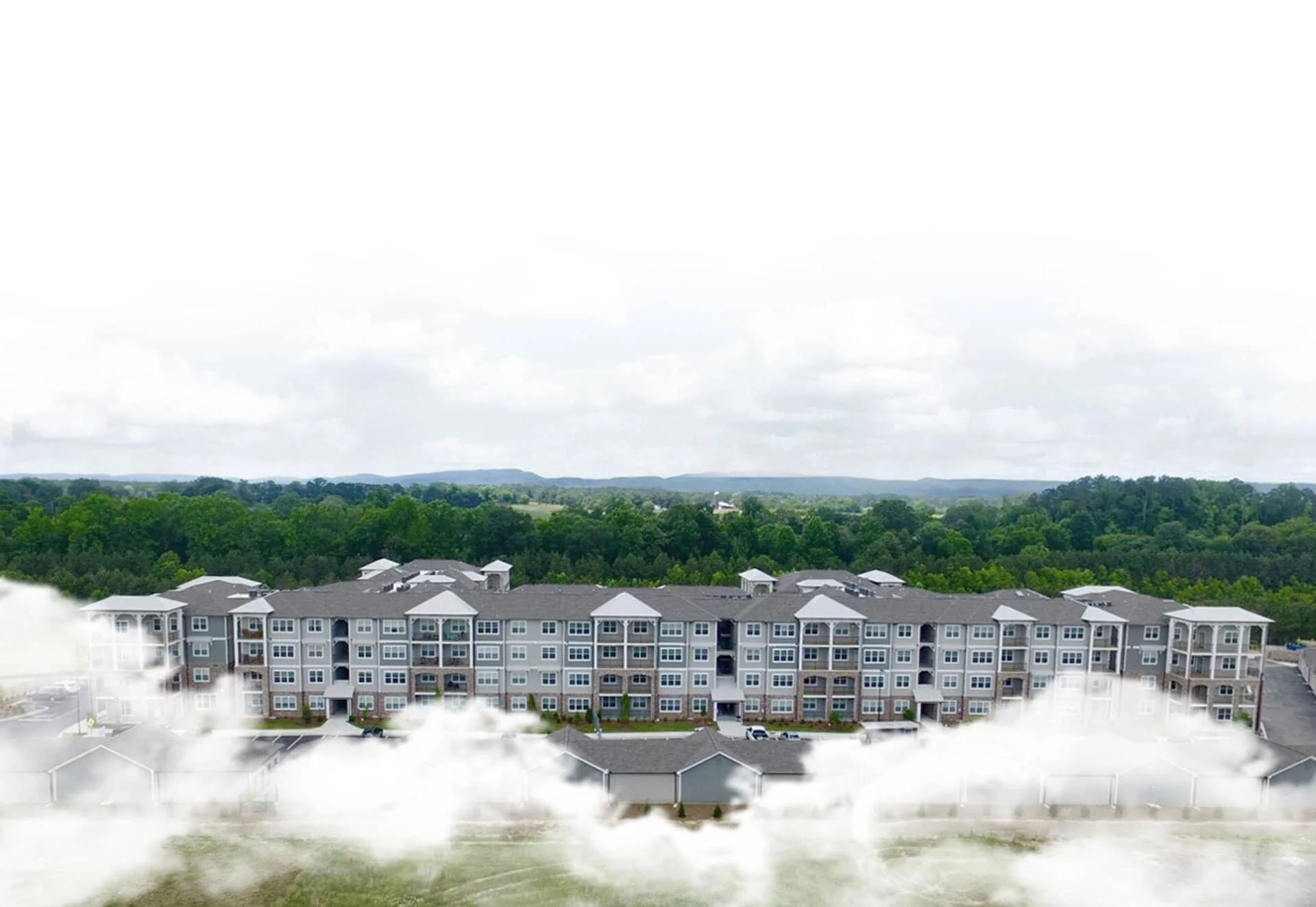
The Beacon is a 158-unit garden-style apartment community built for student housing in Marietta, Georgia. TuckerCraft served as general contractor on the Type III construction project, delivered for developer Campus Realty Advisors and completed in August 2022.
The project called for 3- and 4-story buildings on a fixed academic-year handover, and the deadline wasn't negotiable. A student housing project that misses its handover date doesn't just slip a schedule; it displaces students who already have leases signed for the fall term.

What did COVID do to the project?
The Beacon was under construction during the height of pandemic-related disruption to material costs, labor availability, and supply chains. Type III construction depends on a steady sequence of framing, sheathing, and finish trades, and any one of those slipping pushes the whole schedule.
Costs on student housing construction projects like this one rose sharply during 2021 and 2022 in ways that had nothing to do with the original budget or schedule TuckerCraft and Campus Realty Advisors had agreed to. The standard industry response to that kind of cost shock is a change order: the contractor passes the increased cost to the developer, protects its own fee, and lets the schedule absorb whatever slack it needs to.
That's not what happened here.
01 /
How did TuckerCraft handle the cost overruns?
TuckerCraft didn't pass the COVID-related cost overruns on to Campus Realty Advisors. Instead, the company absorbed them out of its own fee and kept the project on the original timeline.
That's a different story than most contractors tell about pandemic-era construction. Finishing on schedule is one thing, and plenty of general contractors will claim it. Choosing to protect a client's budget by taking the cost onto your own fee, rather than billing it forward, is a decision that only makes sense if the relationship with the developer matters more than the margin on a single job.
It's worth being specific about why that decision is unusual. A change order isn't a failure on a contractor's part; it's the standard, contractually normal response when input costs move outside anyone's control. Most GC agreements are structured to allow exactly that. Choosing not to use that option, on a project where the cost pressure was industry-wide and well documented, means treating the original number as a commitment rather than a starting point for renegotiation. That's the kind of decision that shows up in how a company actually behaves under pressure. For a developer sizing up a general contractor in Marietta, GA for a project with its own hard deadline, that's a more useful signal than a list of completed square footage.
02 /
What did the developer get?
Campus Realty Advisors got a 158-unit student housing community delivered on the original academic-year timeline, with no change orders passed through for pandemic-related cost increases. The building opened on schedule for the students who needed it, and the budget Campus Realty Advisors had planned around going in was the budget they paid. For a developer, that's the outcome that actually matters: not just a finished building, but a finished building that didn't require reworking the pro forma mid-construction.
02 /
What this means for your student housing project?
If you're a developer or property owner planning a 2027 student housing project, the questions worth asking a general contractor are less about their stated capabilities and more about how they've actually handled the moments when a project goes sideways. Anyone can promise to hit a deadline, but not many can point to a specific project where holding that deadline cost them money, and they chose to absorb it rather than pass it on.
Student housing carries a specific version of this risk that other multifamily projects don't. An apartment building that runs a few weeks late costs a developer in carrying costs and delayed lease-up. A student housing building that runs late during an academic-calendar handover doesn't just cost money, it can mean students without a place to live for the fall term. That makes the contractor's response to unexpected cost pressure a schedule question as much as a budget one: a GC that reaches for a change order at the first sign of cost overruns is also a GC that may reach for a schedule extension under the same pressure. The Beacon is one answer to what happens when a contractor treats both the budget and the calendar as fixed.
You can see more completed projects in our gallery, and hear directly from developers we've worked with in our testimonials.
TuckerCraft works across garden-style apartments and Type 3 construction (Type III construction) throughout Georgia and the Southeast, following the same process on every project. For developers evaluating student housing construction partners, a general contractor in Marietta, GA with a specific track record on academic-year timelines is worth a conversation before the next deadline is set.
FAQ
-
The Beacon is Type 3 construction (Type III construction), a 3- and 4-story garden-style student housing development. Type III construction combines noncombustible exterior walls with wood-frame interiors, a common and cost-effective form for mid-rise multifamily and student housing projects.
-
158 units.
-
Campus Realty Advisors developed The Beacon, with TuckerCraft as general contractor.
-
Yes. TuckerCraft delivered the project on its original academic-year timeline and absorbed COVID-related cost overruns through its own fee rather than passing them to the developer, a decision that protected the developer's budget at the contractor's own cost.
-
Yes. TuckerCraft is a general contractor based in Marietta, Georgia, serving multifamily and student housing construction developers across the Southeast, with direct experience managing academic-calendar deadlines.